


Table of Contents
Market Insight: Silicon Steel Density
Market Analysis: Silicon Steel (Electrical Steel)
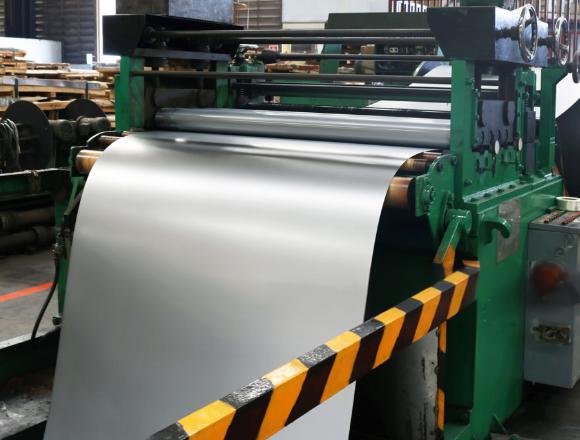
Silicon steel, also known as electrical steel, is a critical ferromagnetic material engineered specifically for efficient energy conversion in electromagnetic devices. Among its defining physical properties, density plays a pivotal role in determining both the performance and economic efficiency of core applications, particularly in power and distribution transformers. The typical density of grain-oriented silicon steel ranges from 7.65 to 7.80 g/cm³, depending on silicon content, grain alignment, and coating type. Precise control over this parameter ensures optimal magnetic flux conduction while minimizing core losses, a key performance indicator in transformer design.
Industrial demand for high-density, high-purity silicon steel has grown steadily in parallel with global electrification and the push for energy-efficient infrastructure. In power transformers, which account for over 60% of silicon steel consumption worldwide, material density directly influences the magnetic permeability and hysteresis characteristics of the core. Higher density, when achieved through controlled alloying and processing, correlates with reduced air gaps in laminated cores and improved stacking factors. This results in lower no-load losses and enhanced thermal stability under continuous operation. As regulatory standards such as IEC 60404-8 and DOE 2016 efficiency mandates become more stringent, transformer manufacturers are increasingly sourcing silicon steel with tightly controlled density and minimal dimensional variance.
At Luoyang Xinzhaohe Aluminum Co., Ltd, with over two decades of experience in advanced metallic materials, we recognize that density alone is insufficient without holistic quality assurance. Variability in density often indicates inconsistencies in cold-rolling, annealing, or coating processes—each of which impacts the final product’s electromagnetic performance. For instance, non-uniform oxide or insulating coatings can introduce micro-defects that reduce effective density at the interface level, leading to eddy current losses. Furthermore, residual stresses from improper slitting or handling can alter the material’s effective magnetic path, negating the benefits of high theoretical density.
Quality silicon steel must therefore be evaluated not only by nominal density but by consistency across coils and batches. Premium-grade grain-oriented silicon steel (CRGO) used in high-efficiency transformers typically maintains density tolerances within ±0.03 g/cm³, ensuring predictable core behavior during transformer assembly and operation. This level of precision reduces scrap rates, improves yield in core stacking, and supports compliance with Tier 1 utility procurement standards.
As demand rises in renewable energy integration, electric vehicle charging infrastructure, and smart grid deployment, the supply chain for silicon steel faces increasing pressure to deliver materials that balance performance, reliability, and cost. At Xinzhaohe, we apply rigorous metallurgical controls and in-line density monitoring to ensure our electrical steel products meet the exacting requirements of modern transformer manufacturing. In an industry where efficiency is measured in fractions of a percent, the physical integrity of silicon steel—anchored by consistent density—is not merely a specification, but a determinant of system-wide energy sustainability.
Technical Specs: Silicon Steel Density
Technical Specifications: Silicon Steel Density and Critical Performance Parameters
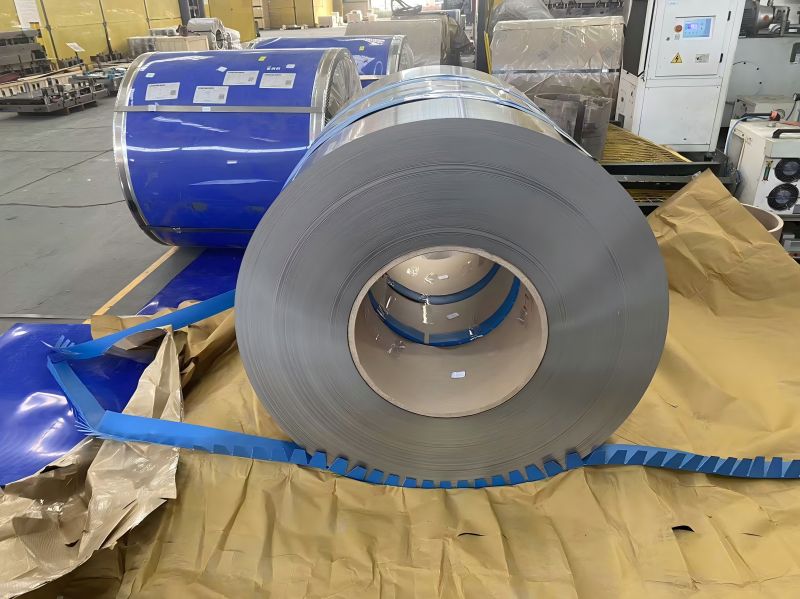
Silicon steel density serves as a fundamental physical property indicator but requires contextual interpretation within electrical steel sourcing. At Luoyang Xinzhaohe, we emphasize that density alone does not dictate electromagnetic performance; it correlates with silicon content and processing quality. Standard density for non-oriented electrical steel (NOES) ranges from 7.60 to 7.80 g/cm³, decreasing as silicon content increases (typically 0.5–3.5 wt%). Higher silicon reduces core loss but marginally lowers saturation flux density. Density deviations outside this range may indicate improper alloying, incomplete decarburization, or inadequate annealing—critical quality control checkpoints in our 20-year production process.
Core loss (iron loss) and magnetic flux density are the primary technical drivers for silicon steel selection in transformers and motors. Core loss comprises hysteresis and eddy current losses, measured in W/kg at specified flux density (e.g., 1.0–1.7 T) and frequency (50/60 Hz). Lower core loss directly improves energy efficiency, with high-grade NOES achieving ≤1.20 W/kg at 1.5 T/50 Hz. Magnetic flux density (B₅₀ or B₈₀0) reflects material saturation, typically 1.90–2.03 T for 3% Si steel. Higher flux density enables compact core designs but must be balanced against core loss trade-offs. Flatness tolerance—critical for lamination stacking—is equally vital; warpage >2.0 mm/m increases air gaps, elevating core loss by 5–15% and causing vibration noise. Our production enforces flatness ≤1.5 mm/m via tension-leveling and precision slitting.
The interdependence of these parameters demands holistic evaluation. For instance, excessive silicon content reduces density and core loss but may compromise flux density and mechanical stability during punching. Similarly, poor flatness negates low core loss benefits through imperfect lamination bonding. Below is a summary of key specifications per IEC 60404-3/8 standards:
| Parameter | Typical Range | Measurement Standard | Industrial Significance |
|---|---|---|---|
| Density | 7.60–7.80 g/cm³ | ASTM A717/A717M | Indicates silicon content homogeneity; deviations suggest processing defects |
| Core Loss (P₁₅/₅₀) | 0.60–2.50 W/kg | IEC 60404-2 | Directly impacts energy efficiency; lower values preferred for high-efficiency motors |
| Magnetic Flux Density (B₅₀) | 1.60–2.03 T | IEC 60404-4 | Determines core size; higher values enable miniaturization |
| Flatness Tolerance | ≤1.5–3.0 mm/m | Internal QC (laser profilometry) | Critical for lamination integrity; >2.0 mm/m increases no-load loss |
Sourcing decisions must prioritize application-specific core loss targets over nominal density values. For 50 Hz power transformers, ultra-low-loss grades (e.g., P₁₇/₅₀ ≤0.90 W/kg) with 2.8–3.2% Si are optimal, accepting slightly reduced flux density (~1.95 T). In high-speed motors, moderate-loss grades (P₁₀/₄₀₀ ≤5.5 W/kg at 400 Hz) with tighter flatness control (≤1.2 mm/m) ensure thermal stability. Density verification remains essential to validate material consistency—our shipments include certified test reports with density, core loss, and flatness data traceable to melt chemistry.
Procurement teams should mandate third-party verification of all parameters under operational conditions. At Luoyang Xinzhaohe, we integrate density checks with Epstein frame testing and surface profilometry to guarantee that every coil meets the electromagnetic and geometric tolerances required for next-generation efficient machinery. Density is a checkpoint; core loss, flux density, and flatness define performance.
Factory Tour: Manufacturing
Silicon Steel Manufacturing Process Overview
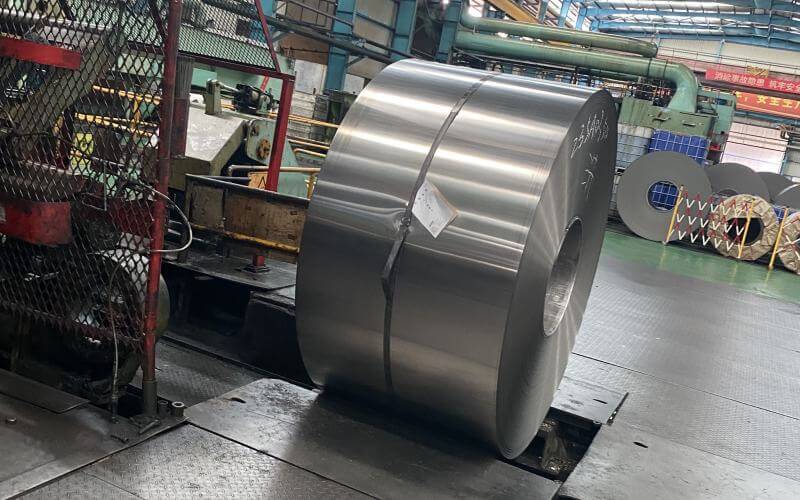
The production of high-performance silicon steel, also known as electrical steel, is a tightly controlled industrial process designed to optimize magnetic properties, mechanical consistency, and electrical efficiency. At Luoyang Xinzhaohe Aluminum Co., Ltd., with over two decades of experience in advanced metal processing, our manufacturing sequence integrates precision engineering with rigorous quality assurance to deliver silicon steel products suitable for demanding applications in transformers, motors, and generators.
The process begins with slitting, where wide master coils of cold-rolled non-oriented or grain-oriented silicon steel are longitudinally cut into narrower strips to meet customer-specific width requirements. This operation is performed on high-precision slitting lines equipped with rotary shear blades and tension control systems to ensure edge quality and dimensional accuracy. The slit coils are then re-rolled onto robust cores, minimizing edge burrs and maintaining flatness.
Following slitting, the material undergoes annealing, a critical heat treatment step that relieves internal stresses induced during prior rolling and slitting processes. Annealing is conducted in controlled atmosphere furnaces, typically under a nitrogen-hydrogen blend, to prevent oxidation and decarburization. For non-oriented silicon steel, this step enhances magnetic permeability and reduces core loss. In grain-oriented variants, secondary recrystallization is promoted to align the crystal structure, maximizing directional magnetic performance. Temperature profiles and dwell times are precisely calibrated based on steel grade and thickness to achieve uniform metallurgical transformation.
After annealing, the steel coils are transferred to the insulation coating stage. A thin, adherent insulating layer—typically a phosphate-based or organic-inorganic hybrid coating—is applied to the surface. This coating serves multiple functions: it electrically isolates individual laminations in stacked cores, reduces eddy current losses, and enhances corrosion resistance. Coating thickness is maintained within tight tolerances (typically 0.5–2.0 µm) using roll-coating or spray application methods, followed by curing in a secondary heating cycle.
The final stage is precision cutting, where coils are transversely cut into laminations or custom-shaped blanks using high-speed turret presses or laser cutting systems. Tooling is maintained to micron-level tolerances to ensure edge squareness and dimensional repeatability. Parts are stacked automatically with controlled stacking pressure to prevent deformation.
Quality control is embedded throughout the process. Incoming material is verified for chemical composition and thickness uniformity. During slitting, edge profile and coil winding integrity are inspected optically. Annealing effectiveness is validated via magnetic property testing using Epstein frames or single-sheet testers. Coating quality is assessed for continuity, adhesion, and electrical resistance. Final dimensional accuracy is confirmed using laser micrometers and coordinate measuring machines (CMMs). All data are documented for full traceability, ensuring compliance with international standards such as IEC 60404 and GB/T 2521.
This integrated approach ensures that every batch of silicon steel produced meets the highest benchmarks for performance, reliability, and consistency in electrical applications.
Packaging & Logistics
Export Packaging Specifications for Silicon Steel Coil Shipments
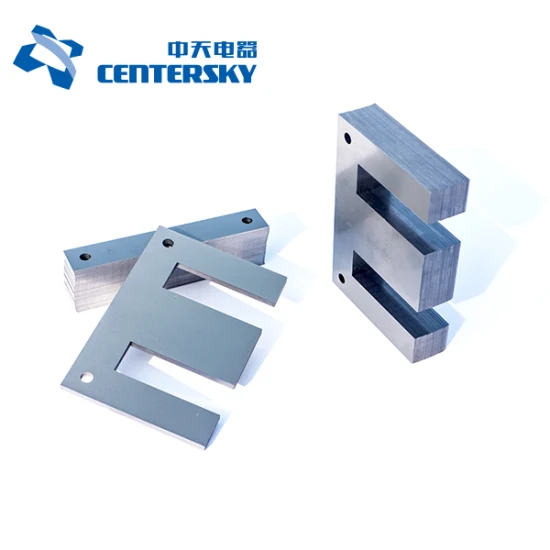
Luoyang Xinzhaohe Aluminum Co., Ltd. implements rigorously engineered export packaging protocols for silicon steel (electrical steel) coils to ensure material integrity during global sea freight. Our 20+ years of metallurgical and supply chain expertise confirm that improper packaging directly compromises core properties, including density consistency and magnetic performance, due to moisture exposure or mechanical deformation. All shipments adhere to ISO 9001 and ISO 14001 standards, with sea freight protocols exceeding IMO cargo safety guidelines.
Wooden pallets form the foundational structural element for coil stability. We utilize ISPM 15-certified heat-treated hardwood pallets with dimensions of 1200 mm × 1000 mm × 150 mm, featuring a minimum load-bearing capacity of 5,000 kg per unit. Each pallet incorporates reinforced stringers and double-faced deck boards to prevent warping under coil weight (typically 5–25 metric tons). Coils are secured via steel strapping (minimum 16 mm width, 1,500 kg tensile strength) anchored to pallet inserts, eliminating lateral movement during vessel transit. Edge protectors made of galvanized steel are applied to coil rims to prevent damage during strapping and handling.
Moisture protection is non-negotiable for silicon steel, which exhibits high susceptibility to rust due to its iron-silicon composition. We deploy a triple-layer moisture barrier system:
First, coils are wrapped in vapor-corrosion-inhibiting (VCI) paper meeting ASTM D1745 Type I specifications.
Second, a 125-micron polyethylene moisture-proof film (ASTM D2463 Class B) is applied with 30% overlap between layers, heat-sealed at all seams.
Third, desiccant silica gel (minimum 500 g/m²) is strategically placed within the film envelope, monitored via humidity indicator cards. This system maintains internal relative humidity below 40% for 90+ days, critical for preventing hygroscopic degradation that alters surface density and lamination quality.
Sea freight safety requires integrated environmental controls. Palletized coils are positioned within ISO containers using dunnage to avoid contact with container walls, minimizing condensation risks from temperature fluctuations (“cargo sweat”). Container humidity is pre-verified below 65% RH prior to loading, and hygroscopic desiccant bags (10 kg per 20-foot container) are affixed to walls. All shipments include shock-impact indicators (set at 50G threshold) and tilt sensors to document handling conditions. Documentation explicitly states compliance with IMDG Code Section 5.2 for ferrous metal shipments, including coil weight distribution certificates to prevent vessel instability.
Our packaging methodology directly safeguards silicon steel density specifications by eliminating moisture-induced oxidation and physical distortion. Density variance beyond ±0.02 g/cm³—often caused by corrosion—invalidates material for transformer or motor laminations. By enforcing these protocols, Luoyang Xinzhaohe ensures coils arrive with unaltered metallurgical properties, reducing client rework costs by up to 30% based on historical export data. Partner with us for shipments where material precision is non-negotiable.
Sourcing from Luoyang Xinzhaohe
Partner with Luoyang Xinzhaohe Aluminum Co., Ltd for Precision Silicon Steel Solutions
With over two decades of specialized expertise in advanced metallic materials, Luoyang Xinzhaohe Aluminum Co., Ltd stands as a trusted partner in the global supply of high-performance silicon steel, also known as electrical steel. Our deep-rooted experience in metallurgical engineering and precision manufacturing enables us to deliver materials that meet the rigorous demands of modern electrical and magnetic applications, including transformers, motors, generators, and high-efficiency power systems.
Our production facility integrates state-of-the-art cold rolling, annealing, and insulating coating technologies, ensuring tight control over grain orientation, magnetic flux density, and core loss characteristics. We specialize in both grain-oriented (GOES) and non-grain-oriented (NGOES) silicon steel, with silicon content ranging from 2.5% to 6.5% to optimize performance across frequency ranges and operating conditions. Each batch is engineered to comply with international standards such as IEC 60404, ASTM A876, and GB/T 2521, guaranteeing consistency in magnetic properties and mechanical integrity.
A critical parameter in electrical steel performance is density, which directly influences core mass, magnetic circuit design, and overall system efficiency. The theoretical density of silicon steel decreases slightly with increasing silicon content due to atomic substitution in the iron lattice. At Luoyang Xinzhaohe, we maintain precise control over alloy composition, achieving a typical density range of 7.60 to 7.75 g/cm³ depending on grade and thickness. This accuracy supports reliable mass calculations and magnetic modeling for transformer and motor core fabrication.
Our facility is equipped with advanced testing instrumentation, including Epstein frame systems, B-H analyzers, and precision thickness gauges, enabling full characterization of magnetic induction (e.g., B50, B800), core loss (W/kg at 1.5T, 50/60 Hz), and mechanical properties. We offer customized strip widths from 10 mm to 1,000 mm and thicknesses from 0.18 mm to 0.65 mm, with options for laser-scribed or non-oriented grain structures to enhance domain refinement and reduce eddy current losses.
Supply chain reliability is central to our operational philosophy. We maintain strategic raw material reserves, in-house quality assurance protocols, and streamlined logistics networks to ensure on-time delivery across North America, Europe, and Asia. Our technical team provides full material certification and engineering support, including density verification and magnetic performance data traceable to each production lot.
For sourcing partners requiring consistent quality, technical precision, and long-term supply stability in silicon steel, Luoyang Xinzhaohe Aluminum Co., Ltd offers a proven industrial advantage.
Contact us to discuss your silicon steel specifications and receive a technical datasheet with density values, magnetic properties, and dimensional tolerances tailored to your application.
Cathy Zhang
International Sales Manager
Luoyang Xinzhaohe Aluminum Co., Ltd
Email: cathy@transformerstrip.com
📉 Factory Direct Savings Calculator
Calculate your potential savings by importing silicon steel density directly from China.