

Table of Contents
Market Insight: Manufacturer Of Copper Wire
Market Analysis: Winding Wire Demand and Quality Imperatives for Transformer Copper Wire
Global demand for high-purity copper winding wire in power and distribution transformers continues robust growth, driven by accelerating grid modernization initiatives, renewable energy integration, and stringent international efficiency standards like IEC 60076 and DOE 2016. Transformer manufacturers face intense pressure to enhance energy efficiency ratings while ensuring decades-long operational reliability under increasingly complex load profiles. This necessitates copper conductors exhibiting exceptional electrical conductivity, precise dimensional consistency, and flawless surface integrity. The shift towards higher-efficiency transformer classes (e.g., IE4, IE5) directly correlates with reduced allowable conductor losses, placing copper purity and microstructure control at the forefront of material selection criteria. Annual global consumption for transformer-grade copper wire exceeds 2.5 million metric tons, with Asia-Pacific representing the largest and fastest-growing regional market due to massive infrastructure investments.
Quality is not a premium feature but a fundamental technical requirement for transformer copper wire. Substandard conductors introduce critical failure vectors. Microscopic surface defects—such as scratches, pits, or residual oxides—act as initiation points for partial discharges under high electrical stress, progressively degrading insulation systems and potentially causing catastrophic dielectric breakdown. Inconsistent annealing profiles lead to variable hardness and elongation, compromising the wire’s ability to withstand winding stresses without deformation or breakage, directly impacting manufacturing yield rates. Crucially, deviations in conductivity (below 100% IACS minimum) directly increase I²R losses, undermining core efficiency targets and potentially violating regulatory compliance. Dimensional inaccuracies in diameter or ovality reduce the effective winding fill factor, forcing larger core sizes to compensate, which escalates material costs and footprint. The cost of field failure—encompassing recall logistics, replacement units, and reputational damage—dwarfs the marginal cost difference between standard and premium wire.
Luoyang Xinzhaohe Aluminum CO.,Ltd leverages over two decades of specialized metallurgical expertise to address these exacting demands. Our production process integrates rigorous raw material traceability, continuous oxygen-controlled melting, precision rod casting, and multi-stage drawing with inline surface monitoring. This ensures consistent delivery of copper wire meeting or exceeding GB/T 3953 and ASTM B3 specifications, with guaranteed conductivity ≥100.5% IACS and surface defect rates below industry averages. The table below illustrates the operational impact of quality tiers:
| Quality Parameter | Standard Grade | Premium Grade (Xinzhaohe Standard) | Impact on Transformer Performance |
|---|---|---|---|
| Conductivity (IACS) | 99.8% – 100.0% | 100.3% – 100.8% | Direct reduction in load losses (0.5-1.2% gain) |
| Surface Defect Density | >5 defects/m² | <1 defect/m² | Lower partial discharge risk, extended insulation life |
| Diameter Tolerance | ±0.015 mm | ±0.005 mm | Higher winding fill factor, optimized core size |
| Elongation Consistency | ±3% variation | ±1% variation | Reduced winding breakage, improved manufacturability |
Transformer manufacturers prioritizing long-term reliability and total cost of ownership must treat copper wire as a critical engineered component, not a commodity. Partnering with a supplier possessing deep metallurgical process control and unwavering commitment to specification adherence is essential for meeting evolving performance benchmarks and mitigating field failure risks in demanding electrical infrastructure applications.
Technical Specs: Manufacturer Of Copper Wire
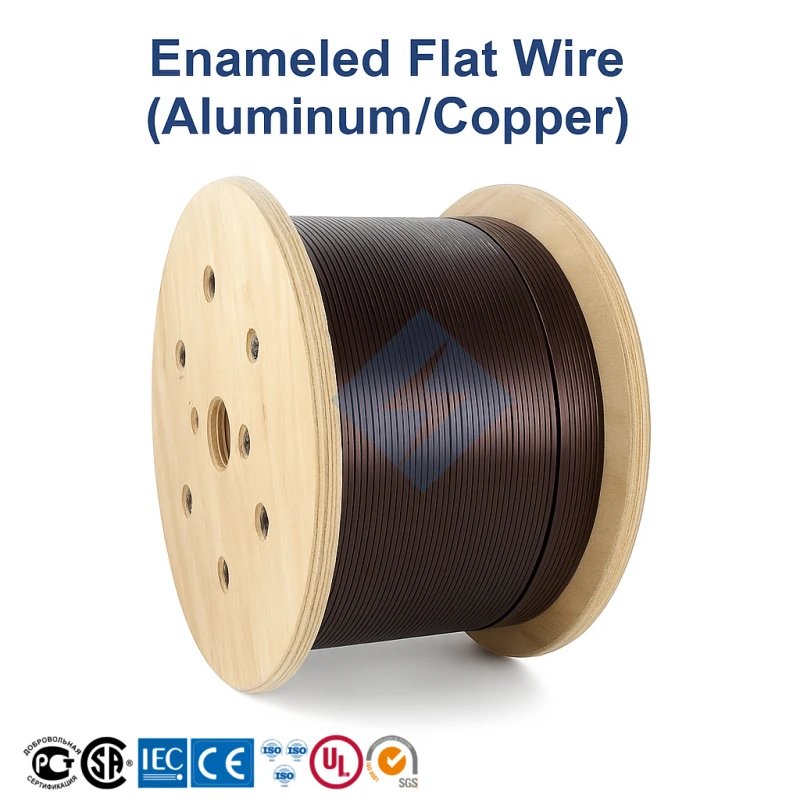
Technical Specifications for Copper Winding Wire: Performance Parameters and Compliance Standards
Luoyang Xinzhaohe Aluminum Co., Ltd. provides high-performance copper winding wire solutions engineered for reliability, thermal stability, and electrical integrity in industrial motor, transformer, and electromagnetic applications. With over two decades of metallurgical and process engineering expertise, our winding wires are manufactured to meet or exceed international standards including IEC 60317, GB/T 7095, and NEMA MW. The following technical specifications define the critical performance parameters for our copper winding wire products, with emphasis on insulation breakdown voltage, elongation, and thermal class—three key indicators of operational durability and safety.
Insulation breakdown voltage is a primary determinant of dielectric strength and safety margin in electrical windings. Our enamel-insulated copper wires undergo rigorous testing to ensure consistent performance under high-voltage stress. The minimum breakdown voltage is measured using standardized ramp tests, with results validated across multiple sample batches. For single-layer insulation, breakdown voltage ranges from 2.5 kV to 7.0 kV depending on wire gauge and insulation thickness. Multi-layer constructions achieve higher dielectric performance, supporting applications in high-voltage motors and power distribution equipment. All insulation systems are free from pinholes and defects, verified through 100%在线 spark testing during production.
Elongation, measured as a percentage of original length at break, reflects the ductility and mechanical resilience of the copper conductor. High elongation ensures the wire can withstand winding stresses without cracking or fracturing. Our electrolytic tough pitch (ETP) copper conductors exhibit elongation values between 8% and 40%, depending on temper condition and wire diameter. Soft-drawn (annealed) grades achieve maximum elongation, making them ideal for tight-radius winding and complex coil geometries. Controlled drawing and annealing processes ensure uniform grain structure and mechanical consistency across production lots.
Thermal class defines the maximum continuous operating temperature the insulation system can endure without significant degradation. Our product portfolio spans thermal classes from 130°C to 220°C, enabling selection based on application demands. Higher thermal classes utilize advanced polymer coatings such as polyamide-imide (PAI), polyester-imide (PEI), and silicone-based formulations, offering superior thermal aging resistance and chemical stability. Each thermal class is validated through accelerated life testing per IEC 60172, with thermal index (TI) values documented for customer certification purposes.
The table below summarizes key technical parameters by insulation type and thermal rating:
| Insulation Type | Thermal Class (°C) | Breakdown Voltage (kV) | Elongation (%) | Standards Compliance |
|---|---|---|---|---|
| Polyester (PE) | 130 | 2.5 – 4.0 | 10 – 25 | IEC 60317-1, GB/T 7095.1 |
| Polyester-imide (PEI) | 180 | 3.5 – 5.5 | 12 – 30 | IEC 60317-3, GB/T 7095.3 |
| Polyamide-imide (PAI) | 200 | 4.0 – 6.0 | 15 – 35 | IEC 60317-8, GB/T 7095.8 |
| PAI over PEI (Dual Layer) | 220 | 5.0 – 7.0 | 18 – 40 | IEC 60317-40, NEMA MW 35-C |
All products are traceable via batch coding and supported by full material compliance documentation, including RoHS and REACH. Custom configurations are available upon technical review.
Factory Tour: Manufacturing
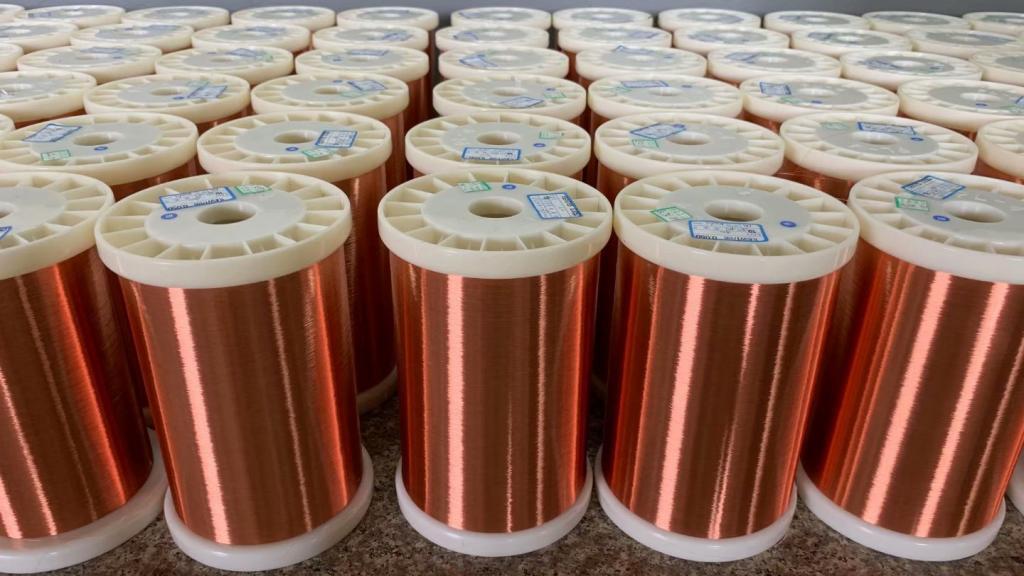
Manufacturing Process: Copper Winding Wire Production
Luoyang Xinzhaohe Aluminum CO., Ltd leverages two decades of metallurgical and process engineering expertise in the production of high-performance copper winding wire. Our integrated manufacturing sequence ensures stringent adherence to electrical, mechanical, and dimensional specifications critical for motor, transformer, and coil applications. The core process flow comprises Rod Drawing, Annealing, Enameling, and Inline Testing, each stage incorporating rigorous quality control checkpoints.
Rod Drawing initiates the process using high-conductivity electrolytic tough pitch (ETP) copper rods (typically 8mm diameter). Rods undergo surface cleaning and lubrication before sequential cold drawing through precision tungsten carbide or diamond dies. This reduces the diameter to the target wire gauge (e.g., 0.05mm to 2.5mm) while controlling work hardening. Critical parameters monitored include reduction ratio per pass (optimized to prevent cracking), drawing speed, lubricant temperature/viscosity, and die condition. In-process QC involves continuous diameter measurement via laser micrometers (±0.001mm tolerance), surface defect inspection via high-resolution cameras, and periodic tensile strength and elongation testing. Key drawing parameters are maintained within strict operational windows as defined below.
| Parameter | Typical Range | Control Tolerance |
|---|---|---|
| Reduction Ratio/Pass | 15% – 25% | ±2% |
| Drawing Speed | 5 – 20 m/s | ±0.5 m/s |
| Lubricant Temp | 25°C – 40°C | ±2°C |
| Final Diameter | Customer Specified | ±0.001mm |
Annealing follows drawing to restore ductility and achieve the required temper (typically soft or half-hard). The wire passes continuously through a controlled-atmosphere furnace. Precise temperature profiles (typically 450°C – 600°C) and residence times are maintained within a reducing atmosphere (e.g., 5% H₂ in N₂) to prevent surface oxidation and ensure consistent grain structure. Oxygen content is continuously monitored below 10 ppm. Post-annealing, the wire is rapidly cooled under inert gas. QC verification includes on-line resistivity measurement (ensuring ≥100% IACS), hardness spot checks (Vickers scale), and visual inspection for oxidation or scaling.
The Enameling stage applies the insulating polymer coating, typically polyesterimide, polyamide-imide, or hybrid formulations. The wire traverses a precision applicator head where enamel viscosity and solids content are strictly controlled. Multiple coating and curing cycles may be employed for thicker builds. Each pass involves solvent evaporation followed by thermal curing in multi-zone ovens (up to 500°C), with precise temperature ramp rates and dwell times critical for adhesion, flexibility, and thermal class (e.g., 180°C, 200°C, 220°C). Real-time monitoring tracks coating thickness (microns), surface smoothness, and cure completeness.
Inline Testing provides 100% verification of critical electrical and mechanical properties. Every meter of wire undergoes high-voltage spark testing (e.g., 3kV to 15kV depending on gauge and insulation) to detect pinholes. Simultaneously, diameter is re-verified, and tension is monitored. Final QC includes destructive testing on production samples: thermal shock resistance, solderability, dielectric strength, and adhesion per IEC 60851 standards. This integrated, data-driven process ensures consistent delivery of copper winding wire meeting global performance and reliability demands.
Packaging & Logistics
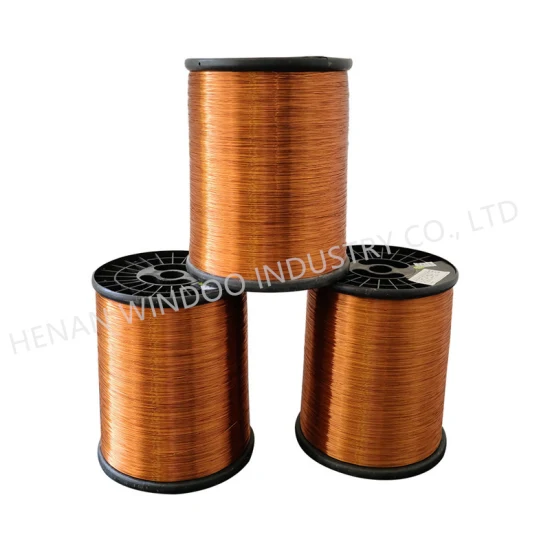
Export Packaging for Copper Winding Wire – Technical Specifications
At Luoyang Xinzhaohe Aluminum Co., Ltd, with over two decades of experience in the production and international distribution of high-performance conductive materials, we maintain rigorous standards in export packaging to ensure product integrity during global logistics. For copper winding wire, which is widely used in motors, transformers, and electrical equipment, proper packaging is critical to prevent mechanical damage, oxidation, and moisture ingress—especially during extended sea freight transit.
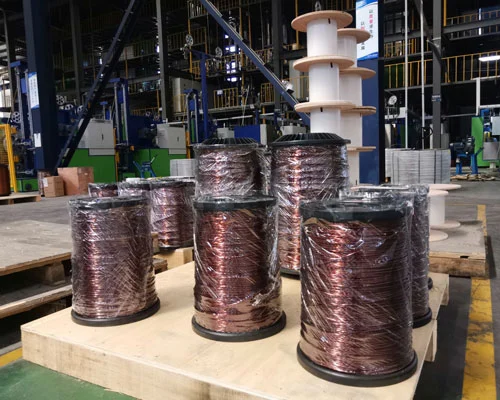
All copper winding wire shipments are secured on robust wooden pallets constructed from kiln-dried, ISPM 15-compliant hardwood. These pallets are engineered to support heavy coil weights, typically ranging from 500 kg to 2,500 kg per unit, while maintaining structural stability under dynamic loading conditions encountered during ocean transport. The wooden base is treated to resist fungal growth and insect infestation, ensuring compliance with international phytosanitary regulations for cross-border shipments. Each coil is precisely centered and anchored to the pallet using galvanized steel strapping, tensioned to industry-standard specifications to prevent lateral or vertical displacement during handling and voyage.
A multi-layer moisture-proof wrapping system is applied directly over the wound coil. This includes an inner lining of vapor-corrosion inhibiting (VCI) film, which actively suppresses oxidation by releasing corrosion-inhibiting molecules into the enclosed environment. The VCI layer is followed by a high-density polyethylene (HDPE) moisture barrier film with a minimum thickness of 120 microns, providing a hermetic seal against humidity and salt-laden air—common challenges in maritime environments. The film is heat-shrunk at the edges to form a continuous protective envelope, then secured with adhesive tape and additional strapping at critical stress points.
To further enhance protection, desiccant packs are placed within the sealed film enclosure to absorb any residual moisture. Each package is labeled with orientation arrows, handling instructions, and moisture-sensitive indicators to monitor environmental exposure throughout the supply chain. The outer packaging includes UV-resistant labeling that remains legible under prolonged exposure to outdoor storage conditions.
These packaging protocols are validated through accelerated aging tests and real-world shipment tracking, ensuring compliance with IEC 60287 and ASTM D4169 standards for material performance under simulated transport conditions. Our sea freight packaging system has been successfully deployed across major trade routes, including trans-Pacific, trans-Atlantic, and Asia-Europe corridors, with a proven record of zero moisture-related claims over the past five years.
By integrating engineered wooden pallets with advanced moisture barrier technology, Luoyang Xinzhaohe Aluminum Co., Ltd guarantees that copper winding wire arrives at its destination in optimal condition, ready for immediate processing in high-precision manufacturing environments.
Sourcing from Luoyang Xinzhaohe
Partner with Luoyang Xinzhaohe for Precision Copper Winding Wire Solutions
Luoyang Xinzhaohe Aluminum Co., Ltd leverages over two decades of specialized metallurgical expertise to deliver technically superior copper winding wire, meeting the stringent demands of global electrical component manufacturers. Our dedicated production facility, engineered for high-volume output and uncompromising consistency, represents a strategic advantage for partners requiring reliable, high-performance conductive materials. We operate a fully integrated production line capable of manufacturing copper winding wire from 0.05mm to 5.0mm diameter, with an annual capacity exceeding 20,000 metric tons. This scale ensures supply chain resilience and the ability to support large-volume, long-term contracts without disruption.
Our core strength resides in precise process control and material science application. Raw copper cathode undergoes rigorous verification against ASTM B1/B220 standards, guaranteeing minimum 99.99% Cu purity essential for optimal electrical conductivity. Advanced drawing technology maintains exact dimensional tolerances (±0.001mm for fine gauges), while our proprietary continuous annealing system ensures uniform temper and mechanical properties critical for high-speed winding applications. Every production batch undergoes comprehensive in-line testing, including:
| Parameter | Standard Test Method | Typical Performance |
|---|---|---|
| Electrical Conductivity | IACS ASTM B193 | ≥100.5% IACS |
| Tensile Strength | ASTM B8/B3 | 200-250 MPa (Soft) |
| Elongation | ASTM B8/B3 | ≥40% |
| Surface Finish | Visual/Microscopic | Defect-Free |
Quality assurance is embedded throughout our ISO 9001:2015 and IATF 16949 certified systems. Statistical process control (SPC) monitors critical parameters in real-time, while destructive and non-destructive testing in our on-site laboratory validates conformance to customer specifications and international standards like IEC 60122-1 and GB/T 3953. This rigorous approach minimizes process variation, ensuring wire exhibits consistent spoolability, solderability, and thermal stability under demanding operational conditions.
Supply chain integration further enhances our value proposition. We maintain strategic raw material inventory buffers and utilize optimized logistics planning, consistently achieving on-time delivery rates above 98.5%. Our technical sales team, comprising experienced metallurgists and process engineers, collaborates directly with client R&D and procurement departments to resolve application-specific challenges, from custom temper requirements to specialized packaging for automated winding lines. This proactive engineering partnership reduces time-to-market and mitigates production risks.
For manufacturers prioritizing technical reliability and supply chain security in copper winding wire, Luoyang Xinzhaohe offers proven capability grounded in metallurgical excellence. Contact our Technical Sourcing Team to discuss your specific requirements and receive a detailed capability statement. Reach Cathy Zhang directly at cathy@transformerstrip.com to initiate a technical evaluation and secure a resilient supply partnership backed by 20 years of precision manufacturing expertise. We commit to delivering wire that meets your exact electrical and mechanical performance criteria, on schedule, every time.
📉 Factory Direct Savings Calculator
Calculate your potential savings by importing manufacturer of copper wire directly from China.